
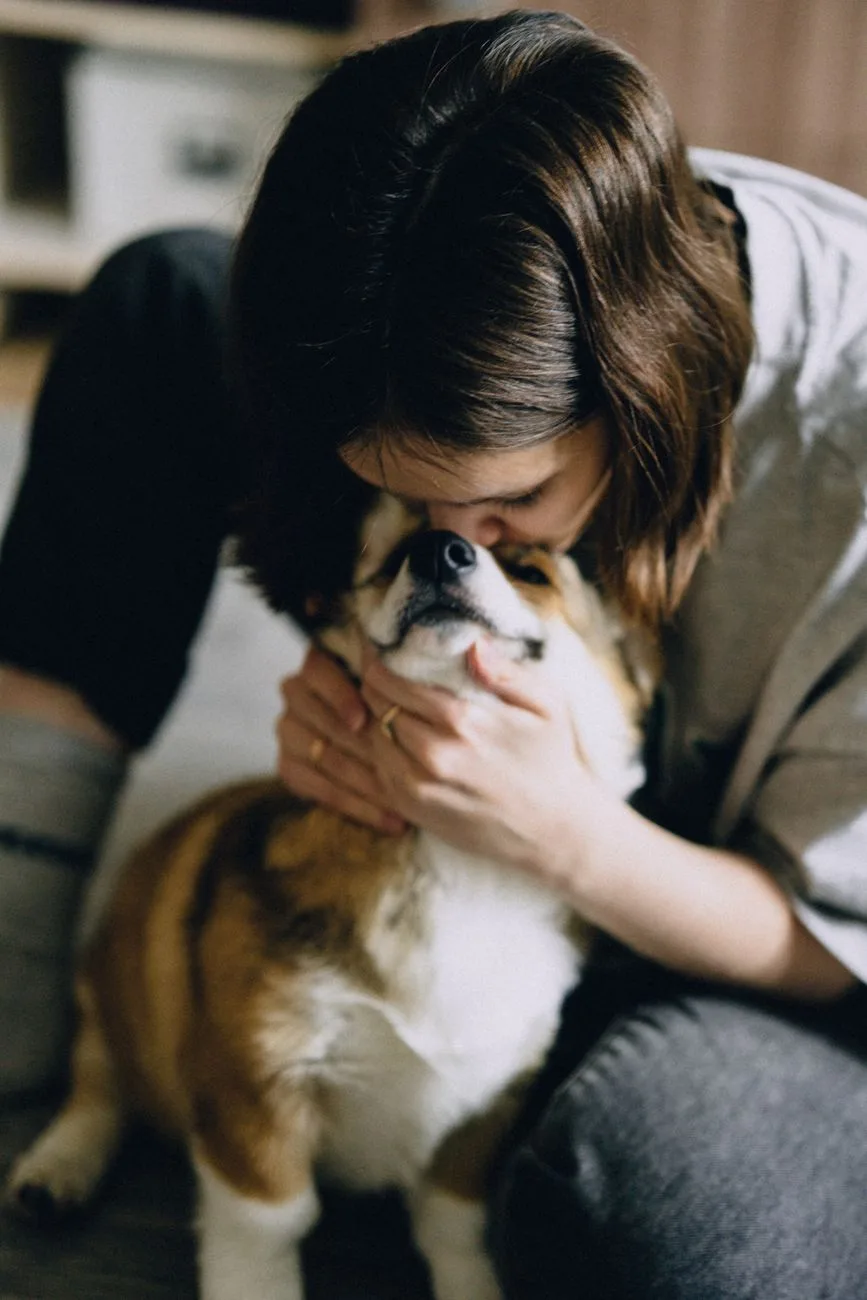
The first days after losing a pet can feel strangely weightless, as if ordinary life has kept moving while something essential has gone quiet. Routines remain, but they no longer hold the same shape. A food bowl sits where it always did. A leash hangs by the door. A favorite spot on the couch looks untouched, though it is suddenly full of absence. In moments like these, many people begin searching for language that can hold what they are feeling, and the phrase pet loss grief stages often appears because it offers a frame for something that can feel otherwise difficult to name.
That frame can be useful, but it helps to approach it gently. Grief after pet loss does not follow a clean sequence. Some people move through the stages of pet grief in order. Others circle back, skip ahead, or feel several things at once. Some days bring tears. Other days bring numbness, guilt, relief, or a calm that feels confusing simply because it arrives at all. The grieving stages after losing a pet are less like a staircase than a landscape. People cross it at different speeds and under different weather.
Understanding those stages can bring a little shape to the experience. It can help pet owners recognize that grief has texture, rhythm, and surprises. It can also soften the pressure to “move on” before the heart is ready.
Many find practical coping suggestions and validation in Pet Loss & Grief after early bereavement.
Why Pet Loss Often Feels So Deep
For many people, a pet is woven into daily life in a way that is both ordinary and profound. A dog waiting at the door, a cat curled by the window, a bird responding to a familiar voice, or a rabbit nudging a hand for attention can become part of the emotional architecture of a home. Their presence is not occasional. It is steady.
That steadiness is part of why pet loss can feel so disorienting. It is not only the loss of an animal. It is the loss of a companion, a routine, a witness to private life, and often a source of comfort that had no need for words.
People sometimes feel surprised by the strength of their response. They may wonder why the grief is so sharp, especially if others around them seem to move on quickly. The bond with a pet is real, and grief tends to reflect the depth of that bond. There is nothing unusual about mourning deeply when daily life has been altered in such a personal way.
What People Mean by Pet Loss Grief Stages
The phrase pet loss grief stages usually refers to a familiar grief model that includes denial, anger, bargaining, depression, and acceptance. In practice, those words are only broad markers. They do not capture every feeling, and they do not appear neatly one after another for everyone.
Still, the model can offer a useful vocabulary for the early days after loss. It gives shape to experiences that might otherwise feel chaotic. It also reminds grieving pet owners that strong reactions are part of mourning, not signs that something is wrong with them.
The stages are best understood as common emotional patterns rather than fixed rules. Some people will recognize one stage clearly. Others will see echoes of several. Many will revisit the same feelings many times, sometimes within a single afternoon.
That movement is normal. Grief tends to be repetitive and uneven. A pet owner may feel calm in the morning, overwhelmed by lunch, and unexpectedly tender again at night. The heart does not always process loss in a straight line.
The Early Shock That Follows Loss
One of the first responses after pet loss is often shock. Even when a pet’s death was expected, the reality can feel distant at first. A person may keep reaching for the food tin or listening for familiar footsteps on the floor. The mind sometimes protects itself by delaying full emotional contact with the loss.
This early stage can look like practical busyness. A person might make arrangements, answer calls, clean up a bed, or go through the motions of a day with unusual efficiency. Later, the emotions may arrive with greater force. Shock does not mean a person is detached. It often means the mind is giving the heart a little room to breathe.
Some pet owners describe a strange sense of unreality. The house feels different. Time feels uneven. A memory of the pet seems sharper than the present moment. This can be one of the quietest but most unsettling parts of the grieving stages after losing a pet, because it often happens before language catches up.
What shock can look like
- Waiting for a pet’s usual sound or movement
- Feeling oddly practical during the first hours or days
- Struggling to absorb what has happened
- Moving through routine tasks on autopilot
- Feeling both numb and tearful in the same day
Denial and the Wish to Undo What Happened
Denial does not always mean refusing to believe a pet has died. More often, it appears as a quiet wish that the situation could still be changed. A person may imagine the pet waking up, recovering, or somehow being there again. The heart reaches backward because what has happened feels too large to hold all at once.
This stage can appear in small, ordinary thoughts. A person may replay the last day, searching for a detail that could have changed the outcome. They may read old messages from the veterinarian. They may keep thinking, “If only I had noticed sooner,” or “If only I had tried one more thing.”
These thoughts are common, and they can feel heavy. They often come from love, responsibility, and the instinct to protect a beloved animal. Grief sometimes turns that instinct inward.
For some, denial is brief. For others, it is woven through the early weeks. It may show up as a reluctance to move a bed, wash a blanket, or say the pet’s name aloud. The mind may know the truth while the heart still resists its final shape.
Anger That Has No Easy Place to Go
Anger can be a surprising part of pet grief. A person may feel angry at illness, at aging, at an accident, at the veterinarian, at family members, or at the timing of the loss itself. Sometimes the anger has no clear target. It is simply there, raw and restless.
This reaction can be difficult because pet loss often carries an expectation of softness. People may expect themselves to feel only sadness and gratitude. Yet grief is rarely so tidy. Anger often appears when the mind and body are under strain, especially when the loss involved difficult decisions or an illness that could not be cured.
Some pet owners feel angry at themselves. They may question whether they asked enough questions, noticed enough symptoms, or made the right choice at the right moment. These thoughts are painful, and they are usually made in retrospect, with information that was not available at the time.
Anger does not mean love was lacking. Often, it is a sign that the bond mattered so much that the loss feels deeply unfair.
Common forms of anger after pet loss
- Anger at the illness or accident that changed everything
- Frustration with the limits of medicine
- Resentment that life keeps moving normally
- Guilt turned outward as irritation
- Anger at oneself for choices made under stress
Bargaining and the Need to Rewrite the Story
Bargaining is often quieter than anger, but it can be just as painful. It appears in the mind’s attempts to rewrite the past or create a different ending. People may think, “If I had gotten help sooner,” or “If I had spent more time at home,” or “If I had recognized the signs earlier.”
These thoughts can become a loop. The mind keeps returning to the same moment, searching for a version of events that would have preserved the pet’s life. This is part of the grieving stages after losing a pet, and it is often tied to love mixed with helplessness.
Bargaining may also take a spiritual or emotional form. A person may find themselves promising future changes, as if dedication or self-improvement could somehow balance the loss. This is less about logic and more about the human need to regain a sense of control.
It can help to notice that bargaining usually grows strongest when the loss still feels fresh. The mind is trying to repair what cannot be repaired. That effort reflects attachment, not weakness.
Depression, or the Heaviness That Settles In
In grief language, depression does not always mean a clinical diagnosis. Here it refers to the deep sadness, fatigue, and heaviness that often follow pet loss. This can be one of the most physically felt stages of pet grief. The body may feel slow. Sleep may change. Appetite may shift. Concentration may become difficult.
There may also be a quieter kind of sadness that appears in waves. A person might suddenly cry while folding laundry, walking past a toy, or opening the door to an empty space that once held a familiar presence. These moments can seem disproportionate until grief is understood as something that lives in the body as much as in the mind.
Some people feel withdrawn during this stage. They may answer fewer messages or avoid conversations that feel too bright or too casual. Others continue with work and social obligations while carrying a private heaviness that no one else can see. Both responses are common.
This stage can be particularly difficult because it may last longer than people expect. It may come and go for weeks or months. The sadness does not necessarily mean healing is absent. Sometimes it means the love is being felt more fully in the absence of daily care.
Signs that grief is resting heavily
- Low energy or a sense of emotional exhaustion
- Difficulty concentrating
- Changes in sleep or appetite
- A desire for quiet or solitude
- Tears that arrive without warning
Acceptance as a Different Kind of Relationship to Loss
Acceptance can sound final, but in grief it usually means something gentler. It does not erase sorrow or imply that the bond is over. It often means the reality of the loss has begun to settle into life without constant resistance.
For pet owners, acceptance may look like being able to say the pet’s name without breaking apart. It may mean telling a story about them and smiling through the sadness. It may mean noticing that the pain still exists, but it no longer fills every corner of the day.
This stage can arrive slowly, and it may be incomplete. A person may accept certain parts of the loss and still feel raw about others. They may be able to tend to a memorial space but not yet open old photos. They may talk about their pet freely and still feel a sudden ache at bedtime.
Acceptance is not forgetting. It is learning to carry memory in a way that makes room for ordinary life again.
Why the Stages of Pet Grief Rarely Move in Order
People often look for the stages of pet grief as if they will explain a sequence to follow. In reality, grief tends to loop, pause, and return. A person may feel accepted one week, then overwhelmed by anger the next after finding a collar tucked in a drawer. A birthday, holiday, move, or quiet afternoon can bring the loss back into sharp focus.
That does not mean healing has gone backward. It means grief is responsive. It can be stirred by memory, setting, season, and routine.
Some pet owners also notice that the intensity of grief changes depending on how the pet died. A sudden loss can create shock and unfinished emotion. A long illness may bring anticipatory grief before death and a different kind of emptiness afterward. Euthanasia can carry both love and difficult responsibility, which may deepen the need to revisit choices and moments with care.
The pet loss grief stages are best understood as a map with soft edges, useful for orientation but not for measurement. Grief does not ask for neatness.
How Pet Loss Can Affect a Household
When a pet dies, the loss often reaches beyond one person. Families may grieve in different ways, on different schedules, and with different levels of openness. One person may want to talk continuously. Another may go quiet. A child may ask the same questions again and again. An older adult may grieve in private because the pet filled a companion role that is hard to describe.
This difference can create tension, but it also reveals how deeply a pet can belong to a household. The animal’s presence may have shaped morning routines, bedtimes, shared responsibilities, and the emotional tone of a home.
Children often need simple and honest language. They may also need repetition. A child might ask whether the pet is coming back, why death happened, or whether the pet knew they were loved. Gentle, clear answers usually help more than abstract explanations.
Adults may need their own space to grieve without feeling they must remain composed for others. It is common for the quietest person in the room to be carrying the heaviest sorrow. Family grief does not unfold evenly.
Guilt and the Questions That Follow
Guilt often travels with pet loss. It can show up as second-guessing medical decisions, feeling upset about time away from home, or wondering whether the pet’s final days were comfortable enough. This is one of the most persistent features of grieving stages after losing a pet because love can make responsibility feel larger in hindsight than it did at the time.
People who had to decide on euthanasia may carry a particular kind of ache. They may question the exact moment, the setting, the words said, or the timing of the choice. These thoughts are common, and they can be deeply tender. They often arise from the wish to have spared the pet every possible discomfort.
Guilt can also appear after a long illness, especially if a pet owner had moments of impatience, exhaustion, or emotional distance. Grief tends to revisit those moments and magnify them, though they were likely part of an honest human response to caregiving strain.
One of the quieter truths of pet loss is that guilt often says more about devotion than wrongdoing. The heart is trying to account for what it could not control.
Grief in the Body
Pet loss is emotional, but it can also be physical. Some people feel pressure in the chest, heaviness in the limbs, or a general sense of tension. Others notice headaches, sleep changes, or a reduced appetite. A familiar routine disappears, and the body has to adjust along with the mind.
This bodily response can be unsettling. A person might wonder why they feel so tired or why a simple errand feels unusually demanding. Grief takes energy. Even quiet grief asks a great deal of the body.
Small acts of care matter here. Eating something simple, resting when possible, taking a slow walk, or sitting with a cup of tea can help create a little steadiness when the internal world feels unsteady. These are not cures. They are ways of keeping the body accompanied while the mind mourns.
How Long the Grieving Stages After Losing a Pet Last
There is no fixed schedule for grief. Some people feel the sharpest pain in the first days or weeks. Others experience a delayed wave after the practical work of arrangements has passed. The pace depends on many things, including the bond with the pet, the circumstances of the death, the support around the household, and a person’s own history with loss.
The stages of pet grief can rise and fade in different patterns. A person may feel stronger after a month, then unexpectedly vulnerable at six months when the house feels quieter than before. Anniversaries, seasons, and ordinary habits often reopen memory.
It can help to think of healing as acclimation rather than resolution. The pet remains important. The absence becomes familiar, though never welcomed. Over time, many people find that the grief changes shape. It grows less consuming and more integrated with memory.
That change is often gradual. It may be noticed first in small moments, such as being able to look at a photo without feeling overwhelmed, or being able to share a favorite story with tenderness rather than tears.
What Helps During Pet Loss Grief Stages
There is no single remedy for grief, and there is no clean set of steps that works for everyone. Still, certain gestures can make the early days more bearable. They do not remove the sorrow, but they can give it a place to rest.
Some pet owners find comfort in keeping a small memorial area at home. A framed photo, collar, favorite toy, or handwritten note can help create a gentle place of remembrance. Others prefer a quieter approach and keep memory in a drawer, a box, or a private ritual.
Many people also find it helpful to speak the pet’s name, tell stories, or write down moments they do not want to lose. These acts can help preserve the relationship in a form that grief cannot erase.
Gentle ways to move through the early days
- Keep routines simple whenever possible
- Allow tears, silence, or distraction without judgment
- Share memories with people who understand the pet’s place in your life
- Create a small memorial space or keepsake box
- Write down details about favorite habits, sounds, and rituals while they are still vivid
Some pet owners also choose memorial jewelry, engraved keepsakes, or a custom remembrance piece to hold a sense of closeness. These objects are most meaningful when they feel personal and quiet, serving memory rather than display. A small token can be a steady companion in a home that feels changed.
Remembrance as Part of Healing
Many people find that remembrance becomes one of the most enduring parts of life after pet loss. The pet may no longer be physically present, but their habits, preferences, and affectionate rituals remain folded into memory. A favorite blanket, a worn toy, a sound on the back porch, or the way a pet greeted the door can all become part of a private archive of love.
Grief often softens when memory has a place to live. Some people light a candle on meaningful dates. Others plant something, frame a photo, or create a notebook with stories and pictures. Some keep ashes in a cherished urn or choose a memorial object that feels peaceful and simple. These choices are personal, and there is no correct form.
The value of remembrance is not in making grief disappear. It is in honoring the life that shaped it.
When Grief Feels Different Than Expected
Some pet owners are surprised by relief after a long illness. Others feel numb instead of tearful. Some feel intense sadness for a few days and then function well for a time, only to feel grief return later. These differences can feel puzzling, especially if they do not match the stories people hear from others.
Grief has many expressions. Relief after a difficult journey does not diminish love. Numbness does not mean indifference. Functioning well in public does not mean the heart is untouched. The pet loss grief stages are broad enough to include these variations, though they are often left out of simpler explanations.
It can be helpful to let the grief be what it is, without forcing it into a more expected shape.
When to Seek Additional Support
Most pet grief softens over time, though it may remain present in some form for years. Still, there are times when extra support can help. If grief becomes so overwhelming that daily life feels impossible for an extended period, or if sleep, eating, and basic functioning are deeply disrupted, speaking with a counselor, grief specialist, or trusted professional may bring relief.
Support can also matter when the loss is tangled with trauma, isolation, or a history of earlier losses that have reopened. Sometimes the pet’s death carries more weight because it touches older grief. In those moments, a compassionate conversation can help untangle what feels heavy.
Asking for support is not a sign that the bond was too fragile to bear loss. It is a sign that the relationship mattered enough to leave a mark.
What Pet Owners Often Carry Forward
Long after the sharpest grief softens, many people carry forward a changed sense of companionship. They may notice that the pet shaped their daily rhythm, patience, routines, or way of noticing small things. The loss remains, but so does the imprint of the relationship.
This is one reason pet loss can be so enduring. A pet is often involved in the ordinary moments that define a home. Their absence creates silence, but their presence leaves habits of care, memory, and attention behind.
For some, the path forward includes another animal someday. For others, it does not. Both responses are complete in their own way. A new pet does not replace the one who died. A home can hold memory and new companionship together, though the timing is deeply personal.
A Quiet Closing Thought
The language of pet loss grief stages can offer structure, but grief itself is softer and more personal than any model can fully explain. It comes in waves, pauses, returns, and unexpected moments of tenderness. It changes the pace of daily life, then slowly shares space with it again.
What many pet owners experience after loss is not a neat progression, but a gradual learning of how to live with love that has changed form. The pet is no longer in the room, yet their place in the heart remains, still shaping memory, ritual, and the way certain quiet moments feel.
In time, the grief often becomes less about an open wound and more about a lasting presence. A name spoken softly. A photo kept close. A ritual repeated on an anniversary. A memory that still brings both tears and warmth. This is how love continues to live, even after goodbye.