
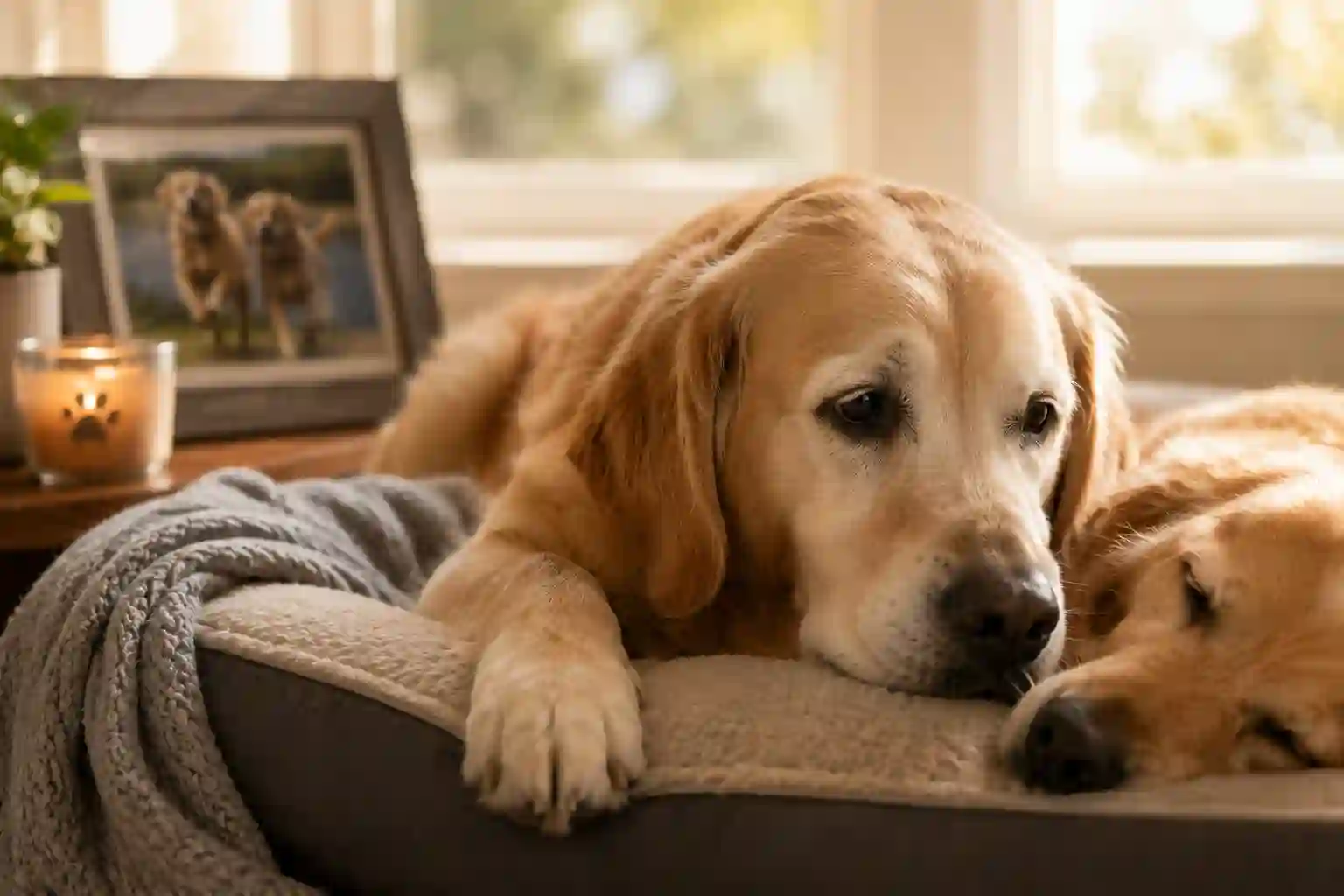
When one dog dies, the silence that follows can feel strangely heavy. A bowl may stay in its place. A leash may still hang by the door. The other dog in the home may wander through the room, pause at the empty bed, or wait at the back door for a companion who is not coming home.
For many pet owners, this raises a quiet and deeply personal question: can dogs grieve the loss of another dog? The short answer is yes, many dogs do seem to respond to the absence of a companion in ways that look very much like grief. Their response may be subtle or intense, brief or long-lasting, but it can be real in its own quiet way.
Understanding senior dog grief after another dog dies can help make sense of behaviors that feel unsettling or tender to witness. A senior dog may sleep more, eat less, shadow the household, or search for the missing dog. Some dogs seem restless. Others grow withdrawn. A few appear calm on the surface, while their routines slowly shift in ways that are easy to miss unless you are paying close attention.
Many owners find comfort in practical support and rituals described in Pet Loss & Grief.
Grief in dogs is not something we can measure in words the way we do with people. But absence matters to them. Bonded dogs build rhythms together. They share space, scent, attention, and daily rituals. When one dies, the surviving dog may feel that change in the deepest parts of routine and familiarity.
How Dogs Respond to the Loss of Another Dog
Dogs are social animals, and many form strong attachments to the other pets in their homes. That connection can look like playfulness, dependency, protection, or quiet companionship. When a dog dies, the surviving dog often notices the change before the household has fully settled into it.
Some dogs begin to act differently within hours. Others take days or weeks. There is no single pattern. The signs can be gentle and easy to overlook, especially if the surviving dog is older and already slowing down.
Common dog mourning behavior may include:
- Searching the house or yard for the missing dog
- Standing near the door, hallway, or bed the other dog used to occupy
- Reduced appetite or interest in treats
- Sleeping more than usual
- Restlessness, pacing, or unusual clinginess
- Changes in vocalization, such as whining or whimpering
- Less interest in play or daily routines
- Increased attention toward the owner
These behaviors do not prove grief in the human sense, but they do suggest that the dog has noticed the absence. For families living through dogs grieving another dog, that awareness can be both comforting and painful. It is comforting because it reflects the depth of the bond. It is painful because it makes the loss visible in another living being who is also adjusting to the change.
Why Senior Dogs May Grieve Differently
Senior dog grief after another dog dies can feel especially delicate. Older dogs often rely on the presence of a familiar companion for routine, confidence, and comfort. Their world may already have become smaller with age. Hearing may be softer, mobility slower, vision less certain. The other dog may have served as a guide through that changing landscape.
When that companion disappears, the emotional and practical shifts can be harder for an older dog to absorb. A senior dog may seem more confused, more unsettled, or more dependent on the people around them. Sometimes the surviving older dog looks lost in a way that feels almost human, as if a piece of the daily map has vanished.
There is also a physical side to consider. Older dogs may have less reserve. A dip in appetite, a change in sleep, or increased stress can affect them more quickly. That is why grief and health should be watched together. What looks like mourning behavior may also overlap with pain, cognitive decline, or another age-related issue.
When a senior dog seems changed after a housemate dies, it helps to think gently and practically at the same time. The loss may be emotional, but the body is part of the story too.
Signs That May Look Like Grief
People sometimes expect grief to look dramatic, but in dogs it is often quiet. A dog may keep going through the motions while carrying an unmistakable sense of absence. The signs may be clear to some families and subtle to others.
Changes in eating
A grieving dog may lose interest in food for a short time. Some eat less at mealtime but still accept treats. Others refuse breakfast, then slowly return to normal as days pass. If the change lasts or becomes severe, a veterinary check is important.
Searching and waiting
One of the most moving signs of dog mourning behavior is searching. A dog may check rooms, sniff around favorite resting spots, or stand in places where the other dog used to sleep. Some wait at doors or windows, as if expecting a familiar return.
Shifts in sleep
Some dogs sleep more after a companion dies. Others appear unsettled and wake often. They may change sleeping spots, sometimes choosing a place closer to the owner or a spot that still carries the scent of the missing dog.
Less interest in play
Dogs that once played together may lose interest in toys, games, or walks for a while. The absence of a playmate changes the shape of the day. What used to feel lively may feel empty.
Clinginess or withdrawal
Some dogs follow their people from room to room. Others become quieter and keep to themselves. Both responses can happen in the same household, and both can be part of a grieving adjustment.
Vocal changes
Whining, howling, or soft crying may appear in some dogs, especially if they are trying to locate the missing companion. In other homes, the loss appears in silence. The dog becomes still, observant, and less expressive than before.
What Dogs May Be Experiencing Emotionally
We cannot translate a dog’s inner life exactly, but we can observe patterns. Dogs remember through scent, habit, association, and relationship. They build emotional maps around the people and animals they live with.
When a companion dies, the surviving dog may experience a disruption in those maps. A place smells different. A routine is incomplete. A social partner is absent from morning checks, meal times, and evening rest. The result may be confusion, stress, or what appears to be sadness.
Some dogs seem to understand absence in a practical sense. They know the other dog is not in the usual places. They respond to the change in the home. Whether that becomes grief in the deeper emotional sense may depend on the dog’s temperament, the bond they shared, and the stability of the environment afterward.
There is something especially tender about watching a dog look for another dog that has died. The searching behavior suggests recognition, memory, and attachment. These are ordinary parts of life with dogs, yet they can feel remarkable in the days after loss.
How Long Does Dog Grief Last?
There is no fixed timeline. Some dogs adjust within a few days. Others take weeks or longer. A senior dog may take more time because the emotional shift is happening within an older body and a more established routine.
Grief often comes in waves. A dog may seem fine in the morning and unsettled at night. Progress may appear uneven. One quiet day does not erase the loss, and one difficult morning does not mean the dog is failing to cope.
Owners sometimes hope for a neat turning point, a moment when everything clearly returns to normal. Real life rarely offers that. More often, the household gradually develops a new rhythm. The surviving dog begins to explore it. Small signs of interest return. Appetite steadies. Sleep becomes calmer. Play may reappear in brief, surprising moments.
For senior dog grief after another dog dies, the timeline may be shaped by age, health, and attachment. A senior dog may never behave exactly as before, and that does not mean the grief is unresolved. It may simply mean the bond mattered.
How Humans Can Help a Grieving Dog
There is no way to explain the death of one dog to another in words. What a family can offer instead is steadiness, patience, and close observation. Small gestures matter more than dramatic ones.
Keep the routine as steady as possible
Dogs often find comfort in predictability. Feeding at the usual time, keeping walks familiar, and preserving quiet daily rituals can help the surviving dog feel safer while adjusting to the absence.
Watch appetite and energy closely
A temporary slowdown may be part of the grieving process. Still, prolonged refusal to eat, marked lethargy, vomiting, or sudden behavioral change should be discussed with a veterinarian. Grief and illness can look similar at first glance.
Offer calm companionship
Some dogs want more closeness. Others want gentle space. Let the dog set the pace. Soft presence often helps more than constant attention.
Preserve familiar scents and spaces for a while
The surviving dog may continue to seek the scent of the missing companion. Leaving blankets or beds in place for a time can feel soothing. In some homes, this becomes part of the transition. In others, belongings are removed slowly, one piece at a time.
Stay attentive to senior health
If the dog is older, changes after a loss should be monitored with extra care. A reduced appetite or restlessness may pass, but it may also reveal an underlying medical issue. A gentle exam can bring peace of mind.
What Not to Rush
In the tenderness after a loss, people sometimes feel pressure to restore normal life quickly. They may worry that keeping the deceased dog’s bed in place will prolong sorrow, or that the surviving dog needs a replacement companion right away. These choices are personal, and there is no single correct path.
What often helps most is giving the home room to adjust. The surviving dog may need time to understand the new shape of the family. Humans may need that time too.
It can also help to avoid reading too much into one behavior. A dog who seems calm may still be processing change. A dog who is restless may simply need reassurance. A dog who returns to eating may still have moments of searching later on. Grief in dogs rarely follows a straight line.
Children, Families, and the Surviving Dog
When a household includes children, the surviving dog can become part of the family’s shared grief. Children often notice the dog’s behavior before adults do. They may point out that the dog sleeps beside the deceased dog’s bed or waits at the gate where the two used to run together.
These observations can open gentle conversations. The dog’s behavior becomes a way to talk about loss in a concrete, familiar form. For some families, that shared attention can be grounding. It gives shape to the silence.
At the same time, it helps to keep interactions calm. Children may want to comfort the surviving dog through constant hugging or noise, but a grieving dog often does better with quiet companionship and respectful space.
When the Surviving Dog Seems Fine
Not every dog shows obvious signs after another dog dies. Some remain alert, interested, and outwardly unchanged. This can be surprising, especially if the two dogs were deeply bonded in the human family’s eyes.
A dog may be grieving internally without showing much outward disruption. Or the dog may simply be more adaptable than expected. There is room for both possibilities. A lack of visible dog mourning behavior does not mean the loss had no meaning.
Sometimes the surviving dog becomes more attached to the human household after a companion dies. The bond may shift rather than disappear. This change can feel comforting, and it can also feel bittersweet. A family may notice that the dog leans into more contact, more eye contact, more waiting at the door. These gestures can feel like a quiet request for reassurance in a changed home.
Honoring the Dog Who Died While Caring for the One Who Remains
After one dog dies, the surviving dog and the human family are both living inside a new emotional landscape. It can help to honor the dog who died in ways that are gentle, visible, and meaningful. This may support the people in the home, and it can also create a steadier atmosphere for the surviving dog.
Some families keep a photo by the feeding area. Others save a collar, a favorite blanket, or a paw print. A framed picture, a small memorial shelf, or a quiet place in the garden can give the loss a dignified home in the household.
These acts are not for display. They are ways of saying that a life mattered. For children, they can also offer a tangible point of remembrance. For the surviving dog, the home remains familiar, but the human heart makes room for memory in a calm, loving way.
Simple remembrance rituals
- Lighting a candle at a quiet moment of the day
- Writing down a few favorite memories
- Keeping a collar, tag, or lock of fur in a small keepsake box
- Planting a tree or flowers in a favorite outdoor space
- Creating a framed photo near the place the dog used to rest
These small rituals can help families move through the first days and weeks without forcing closure. They leave room for memory to stay present.
When to Seek Veterinary Help
Because grief and illness can overlap, a change in behavior should not be dismissed too quickly, especially in an older dog. Contact a veterinarian if the surviving dog shows any of the following:
- Refusal to eat for more than a day or two
- Marked lethargy or weakness
- Vomiting, diarrhea, or signs of dehydration
- Sudden confusion or disorientation
- Persistent pacing, shaking, or signs of pain
- Rapid weight loss
- Any behavior that feels sharply different from the dog’s usual self
A loss in the home can hide the beginning of a medical issue, especially for a senior dog. A careful check can help separate grief from illness, and sometimes it reveals both.
What Grief Can Teach Us About the Bond Between Dogs
Watching dogs grieve another dog can change the way people think about animal relationships. The bond becomes visible in the most ordinary places. At the water bowl. By the front window. In the small pause before bedtime.
Grief reveals how deeply dogs notice one another. It also reminds us that companionship is woven into daily life in ways that are easy to underestimate until absence makes them clear.
For families facing senior dog grief after another dog dies, the surviving dog may feel like both a comfort and a mirror. The dog remains, but the shape of the home has changed. Caring for that remaining dog becomes part tenderness, part stewardship, part quiet witness to the life that was shared.
A Quiet Closing Thought
When a dog dies, the surviving dog may carry the loss in ways we can see and ways we can only sense. Searching, sleeping, waiting, and changing routines can all be part of that response. Some dogs grieve openly. Some grieve in stillness. Some seem to adapt while holding a private memory close.
There is a gentle dignity in noticing these shifts and treating them with care. The surviving dog is living through a change in the home, while the family is living through the absence of a beloved companion. Both deserve patience. Both deserve tenderness.
In the quieter days that follow, the home may begin to hold memory and presence at the same time. A collar on a shelf. A familiar bed left in place for a while. A senior dog resting near the window, breathing more calmly than before. These small details can carry love forward in a way that feels honest and lasting.
Grief leaves its mark, but so does devotion. And in the stillness after one dog is gone, that devotion often remains visible in the dog who stays.