
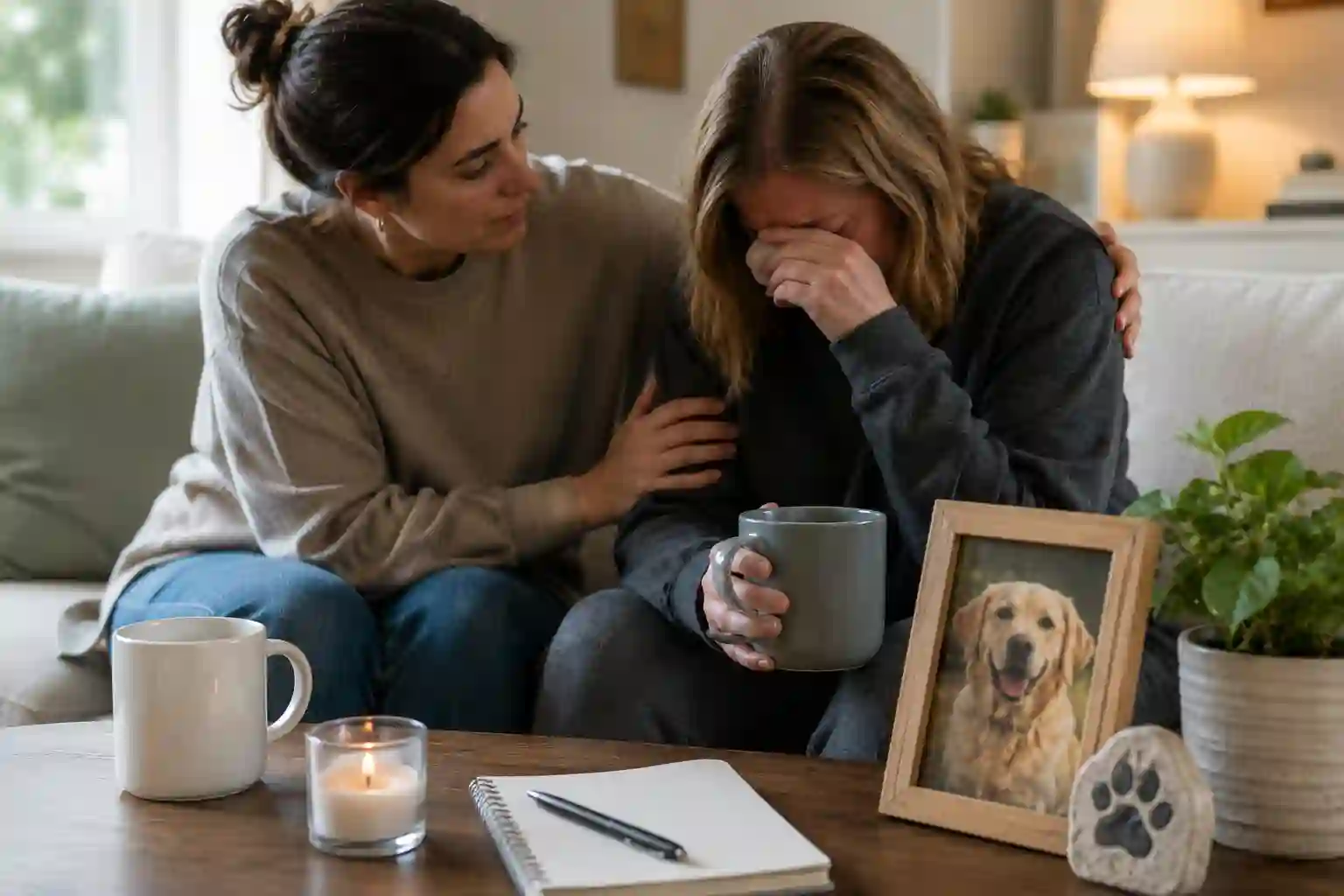
Grief after a pet’s death often arrives in a quiet way, then stays longer than people expect. A home can feel changed by the absence of paws on the floor, a collar left by the door, or the small routines that once filled the day without effort. For someone standing close to that loss, the kindest support is usually simple, steady, and sincere.
If you are wondering how to help a grieving pet owner, the answer is rarely found in perfect words. More often, it lives in patience, attention, and a willingness to make room for love that has nowhere to go. Supporting someone after pet loss is less about saying the right thing and more about staying present in a way that feels gentle and real.
Pets hold a place in family life that is easy to overlook until they are gone. They are woven into morning routines, quiet evenings, and the private rhythm of a household. When that presence ends, grief can feel surprisingly deep. It may resemble mourning a family member, because in many homes, that is exactly what it is.
Understanding what pet loss can feel like
People sometimes underestimate the weight of losing a pet. They may imagine sadness, but not the daily disorientation that follows. A grieving owner may keep expecting the sound of nails on the floor, the nudge of a nose, or the familiar greeting at the door. Those small expectations can break open the day again and again.
Grief after pet loss can bring many feelings at once. There may be sorrow, guilt, tenderness, numbness, and moments of relief mixed with regret, especially if illness or difficult decisions were part of the story. Someone may replay final days in their mind, wondering whether they did enough, waited too long, or made the right choice. These thoughts can be heavy, even when the care they gave was full of devotion.
It can also be hard for a grieving owner to explain the loss to others. Some people respond with kindness. Others may minimize the bond, perhaps saying it was “only a pet.” That kind of remark can land painfully, because it misunderstands the depth of the relationship. A pet is part of the daily fabric of life. Their absence is felt in ordinary moments that others rarely see.
How to help a grieving pet owner in the first days
In the earliest days after a loss, support should feel calm and uncomplicated. A grieving person may be exhausted, foggy, or overwhelmed by practical decisions. They may need help with things they normally handle without thinking. Gentle assistance can make those first days feel less lonely and less heavy.
A helpful resource, Pet Loss & Grief outlines coping strategies and practical steps for the first days.
Lead with simple acknowledgment
A brief, sincere message often means more than a long speech. A few honest words can open a door without asking too much from someone who is already carrying grief.
Try saying:
- I’m so sorry about your pet.
- I know how much they meant to you.
- I’m thinking of you and your family.
- If you want to talk about them, I would love to listen.
These phrases are gentle because they do not force a response. They honor the relationship without trying to tidy up the emotion.
Offer practical help without making them ask
Grief can make even small tasks feel strangely difficult. A person may forget to eat, avoid returning calls, or feel unable to make decisions. If you are close to them, offer concrete help. Specific offers are easier to accept than broad statements.
You might say:
- I can drop off dinner tonight.
- If you need help making phone calls, I can sit with you while you do it.
- I’m free this afternoon if you want company.
- I can help with errands or take something off your plate for a day or two.
Supporting someone after pet loss often means lowering the number of decisions they have to make. Quiet help can be a relief when their mind already feels full.
Respect their pace
Some people want to talk right away. Others need silence. Some will cry openly. Others will seem composed until a small reminder brings everything forward. There is no correct rhythm for grief. Let them set the pace where you can.
If they do not answer messages immediately, do not assume your care was unwelcome. If they seem distracted or distant, they may simply be moving through the day with less capacity than usual. Grief can narrow attention and soften patience. Gentle consistency is often more helpful than repeated questions.
What to say, and what to avoid
Words matter after a loss, though they do not have to be elaborate. The best language usually feels modest, direct, and kind. It leaves room for grief rather than trying to cover it.
Thoughtful things to say
- They were clearly very loved.
- What was your favorite thing about them?
- I remember how happy they always looked with you.
- If you want to share a memory, I’d like to hear it.
- I’m here if you want company, a distraction, or a quiet space.
These responses help because they make room for memory. They invite the grieving owner to speak about their pet in a way that keeps the bond alive.
Words that can sting, even when meant kindly
Some common remarks can make a grieving person feel unseen. They may not remember every word, but they will remember the feeling behind them. It is better to avoid comments that hurry the grief along or compare it to other losses too quickly.
- You can get another pet.
- At least they had a long life.
- It was time.
- They’re in a better place.
- At least it was just a pet.
Some of these statements may be true in part, but grief rarely softens under logic alone. A person can know their pet was old or ill and still feel the full weight of the absence.
Why grief after pet loss can feel so personal
People often underestimate how deeply pets become part of a person’s identity. A dog may be woven into morning walks, road trips, and the feeling of coming home. A cat may shape the quiet of a house, choose laps with great confidence, and create a sense of companionship that steadies the day. Birds, rabbits, horses, reptiles, and other companions can hold the same place of devotion and routine. Their care becomes part of how a person moves through life.
That is why pet loss can unsettle more than the heart. It can alter the shape of daily life. A grieving owner may feel strange reaching for the leash, washing a bowl, or looking toward a favorite sleeping spot that is now still. The grief may be tied to those habits as much as to the final goodbye.
There is also the matter of unconditional presence. Pets witness ordinary life without judgment. They keep company during lonely evenings, hard seasons, and small celebrations. Losing that kind of companionship can leave a silence that feels unusually wide.
Helping grieving pet owners at home and in daily life
If you live with the person who is grieving, the support can become even more practical and intimate. Household routines often change after a pet dies. Some rooms feel different. Some mornings feel emptier. People may move around the house with a kind of reverence, avoiding the spots that hurt the most.
Leave space for rituals
Some grieving pet owners want to keep a collar, blanket, paw print, photo, or urn in a place that feels meaningful. Others prefer to pack certain items away until they feel ready. Both choices are valid. Rituals can bring comfort because they give grief a shape.
You can help by treating these objects with care. If the person has made a memorial corner, do not rush to tidy it away. If they want to create a small display with a favorite photo or a candle, support that quietly. A remembrance space can become a soft place to return to, especially in the early weeks.
Protect them from unnecessary pressure
Well-meaning friends and relatives sometimes ask when the person will be “back to normal” or whether they are planning to adopt another pet. These questions may come too soon. Grief does not move according to a schedule, and another pet cannot replace the one who died.
If others around them are impatient, your steadiness matters. A calm presence can make it easier for the grieving owner to move through their own timing without defending it.
Take care with anniversaries and quiet triggers
Dates can carry extra weight after a pet’s death. The day of their passing, a birthday, a surgery date, or the first holiday without them may stir grief again. Even familiar sounds can become triggers. The jingle of a tag, the rustle of a treat bag, or a favorite resting blanket can bring a wave of memory.
When those moments come, it helps to avoid treating the reaction as something to fix. Acknowledging the date with a simple note or a small gesture can mean a great deal. A person may appreciate a message that says, in effect, I remember.
How to support children and family members after a pet dies
Pet loss often affects the whole household. Children may grieve in sudden bursts, then return to play as if nothing has happened. Adults may feel pressure to stay composed for everyone else. The emotional atmosphere can shift from room to room.
With children, keep the truth gentle and clear
Children usually do better with honest language than with vague explanations. Clear words, spoken kindly, can help them make sense of what has happened. The aim is not to overwhelm them. It is to speak plainly while allowing them to ask questions at their own pace.
They may want to draw pictures, write a note, plant something in memory of the pet, or keep a favorite toy nearby. These small acts can help them express a loss that may be larger than their words.
Within families, grief may look different for each person
One family member may want to talk constantly about the pet. Another may become quiet. Someone else may focus on practical tasks to avoid feeling too much at once. These differences can create misunderstandings if people assume grief should look the same for everyone.
Supporting someone after pet loss sometimes means making room for these differences. A family may need permission to grieve in separate ways while still caring for one another.
Helping grieving pet owners through guilt and second-guessing
Guilt is one of the most common companions of pet grief. A person may replay the final weeks of care, wondering whether they missed a sign, delayed a vet visit, chose the wrong treatment, or made the right decision at the right time. This inner loop can be hard to interrupt because love often leaves people with the wish that they could have done more.
If you are trying to help, listen for the guilt beneath the words. Do not rush to correct it. Instead, reflect back the devotion you saw. You might say, I know how carefully you cared for them or They were surrounded by love. These phrases do not erase regret, but they can soften its harshness.
Sometimes guilt is tied to euthanasia, which can be especially tender. Even when the decision was made with veterinary guidance and deep care, it can still feel unbearably final. A grieving owner may need time to understand that choosing peace for a suffering pet is an act of love, not failure.
Finding meaningful remembrance after pet loss
Grief often asks for somewhere to go. Remembrance can offer that place. It does not need to be grand. It only needs to feel honest to the relationship.
Small rituals can carry a lot of meaning
Some people light a candle on the day their pet died. Others keep a framed photo in a favorite room. A few write letters, keep a lock of fur, or place a collar inside a shadow box. These acts may seem quiet from the outside, but they can be deeply grounding.
Memory rituals help because they create continuity. They acknowledge that the relationship did not vanish, even if its form changed. For many people, that recognition is part of healing.
Creative remembrance can help name the bond
Journaling, sketching, planting a tree, compiling a photo album, or creating a small remembrance shelf can help someone give shape to the love they still feel. Some people choose memorial jewelry, a keepsake ornament, or a custom piece that holds a trace of their pet close. When offered gently, these objects can become part of a personal ritual rather than a purchase.
If you are helping a grieving pet owner choose a memorial, listen first. Their style of remembrance may be quiet and private, or they may want a visible tribute that keeps the pet present in the home. The best gesture is the one that feels true to them.
Supporting someone after pet loss from a distance
Distance does not lessen the importance of care. If you cannot be there in person, a thoughtful message, a handwritten note, or a small delivery can still reach across the space between you.
When supporting someone after pet loss from far away, it helps to keep the gesture simple and specific. A memory card, a photo of the pet you once knew, or a short voice message can feel more personal than a generic sympathy note. Mention a detail you remember, such as the pet’s habit of greeting people at the door or the way they settled into a favorite chair.
Specific memories remind the grieving owner that their pet was seen and known by others. That recognition can be comforting on a day that feels too quiet.
What healing tends to look like over time
Grief after pet loss rarely moves in a straight line. The early days may be dominated by shock and practical tasks. Later, the sorrow may become more intermittent, arriving in waves rather than in one continuous ache. A person may think they are doing better, then be caught off guard by a sound, season, or object that brings everything back for a moment.
That rhythm is part of healing. It does not mean the bond has faded. It means the person is learning how to carry it differently.
Helpful support usually changes with time. In the beginning, the grieving owner may need food, company, or help making arrangements. Later, they may need a friend who still remembers the pet’s name months after the loss. That kind of remembrance can feel deeply caring, because it honors the ongoing shape of grief.
It is also worth noticing that people often grieve in layers. They may miss their pet, then feel sad about the loss of routine, then feel guilt about moving forward, then feel gratitude for the years they shared. These layers can appear out of order. There is no tidy path through them.
When grief seems especially heavy
Some losses are especially hard because of the circumstances around them. A sudden accident, a long illness, a medical emergency, or a painful decision can make the grief more complicated. There may be trauma mixed with sorrow, or a sense that the loss came too fast for the mind to absorb.
If a person appears unable to function, is withdrawing from everything for a long period, or seems stuck in intense guilt, more support may be needed. This does not mean something is wrong with their love. It may mean the loss has pressed on many parts of life at once. Encouraging them to speak with a trusted counselor or grief professional can be a caring step, offered without pressure.
Still, most people need ordinary human support before they need anything else. Food on the table, a check-in text, a walk together, and patient listening can matter more than polished advice.
A compassionate way to stay present
If you want to know how to help a grieving pet owner, the most useful answer may be this: stay gentle, and stay real. Let the pet be mentioned. Let the stories be told again. Let the sadness arrive without rushing it away.
There is dignity in taking pet grief seriously. There is care in remembering that a cat curled in a window, a dog at the end of a leash, or a horse in a field can leave an imprint on a life that lasts far beyond the final day. The love remains part of the person who lived with them. So does the habit of reaching for them in ordinary moments.
Helping grieving pet owners is often a matter of companionship, patience, and respect. A small note, a remembered date, a warm meal, or a quiet seat beside someone can carry more meaning than grand advice. These gestures say, with tenderness, that the bond mattered and still matters.
In time, many people find that grief and gratitude begin to live side by side. The sadness may soften, but the love does not disappear. It becomes part of memory, part of ritual, part of the private language that remains long after the house grows quiet again.
That quiet can hold love too. And for many pet owners, that is where remembrance begins to feel like a kind of home.